When Does a Sewer Line Need Repair?
Drain cleaning solves blockages caused by buildup or debris. But when the pipe itself is damaged—cracked, collapsed, or broken—cleaning won't fix it. Signs that your sewer line may need repair include:
- Frequent backups even after professional cleaning
- Sewage smell in your yard or basement
- Wet, soggy spots or unusually green patches in the lawn
- Sinkholes or settling near your sewer line path
- Foundation cracks appearing near plumbing areas
- Camera inspection showing cracks, breaks, or collapsed sections
Common Causes of Sewer Line Damage
- Tree root intrusion: Roots seek moisture and can crack pipes or grow through joints.
- Age and deterioration: Older clay, cast iron, and Orangeburg pipes break down over time.
- Ground shifting: Settling, earthquakes, or heavy equipment can crack or misalign pipes.
- Corrosion: Metal pipes corrode from the inside and eventually fail.
- Improper installation: Poorly installed connections can separate or leak.
- Freezing: In rare cases, shallow pipes can crack from freeze/thaw cycles.
Sewer Problems? We'll Diagnose It Right.
A camera inspection shows exactly what's wrong—so you get the right solution, not guesswork.
Call 914-441-7376Sewer Repair Options
Not every sewer problem requires replacing the entire line. Depending on what we find, we may recommend:
Spot Repair
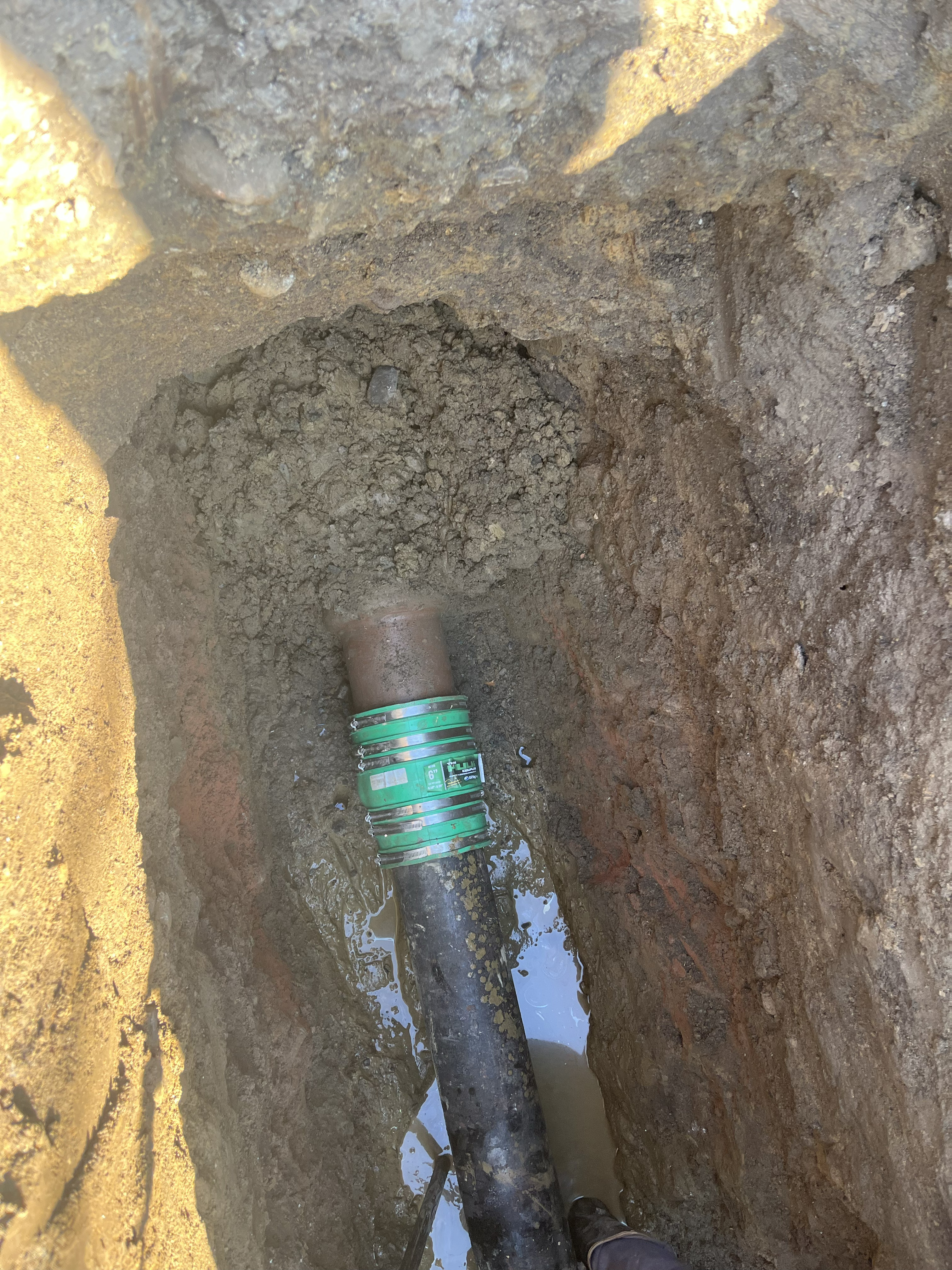
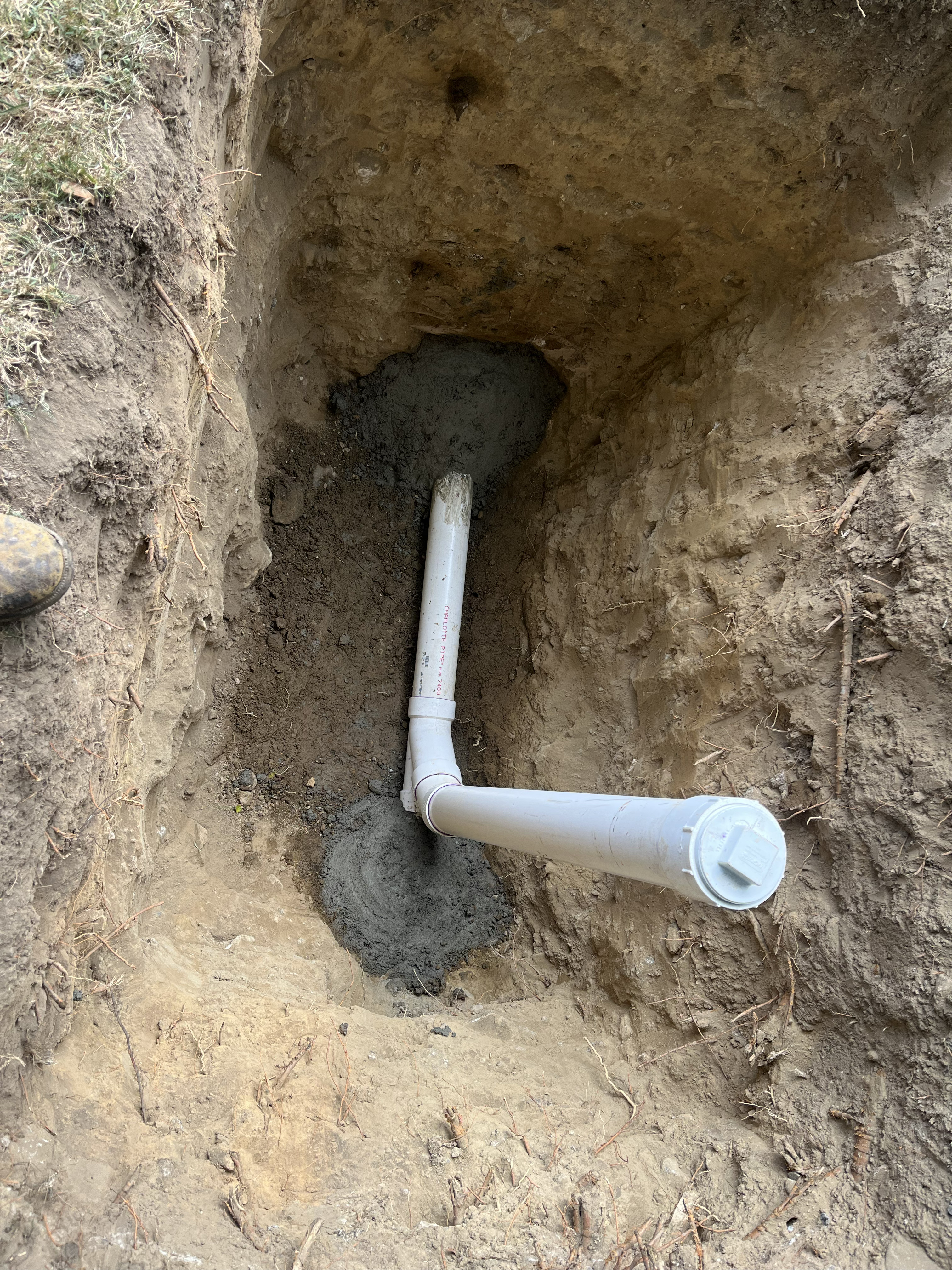
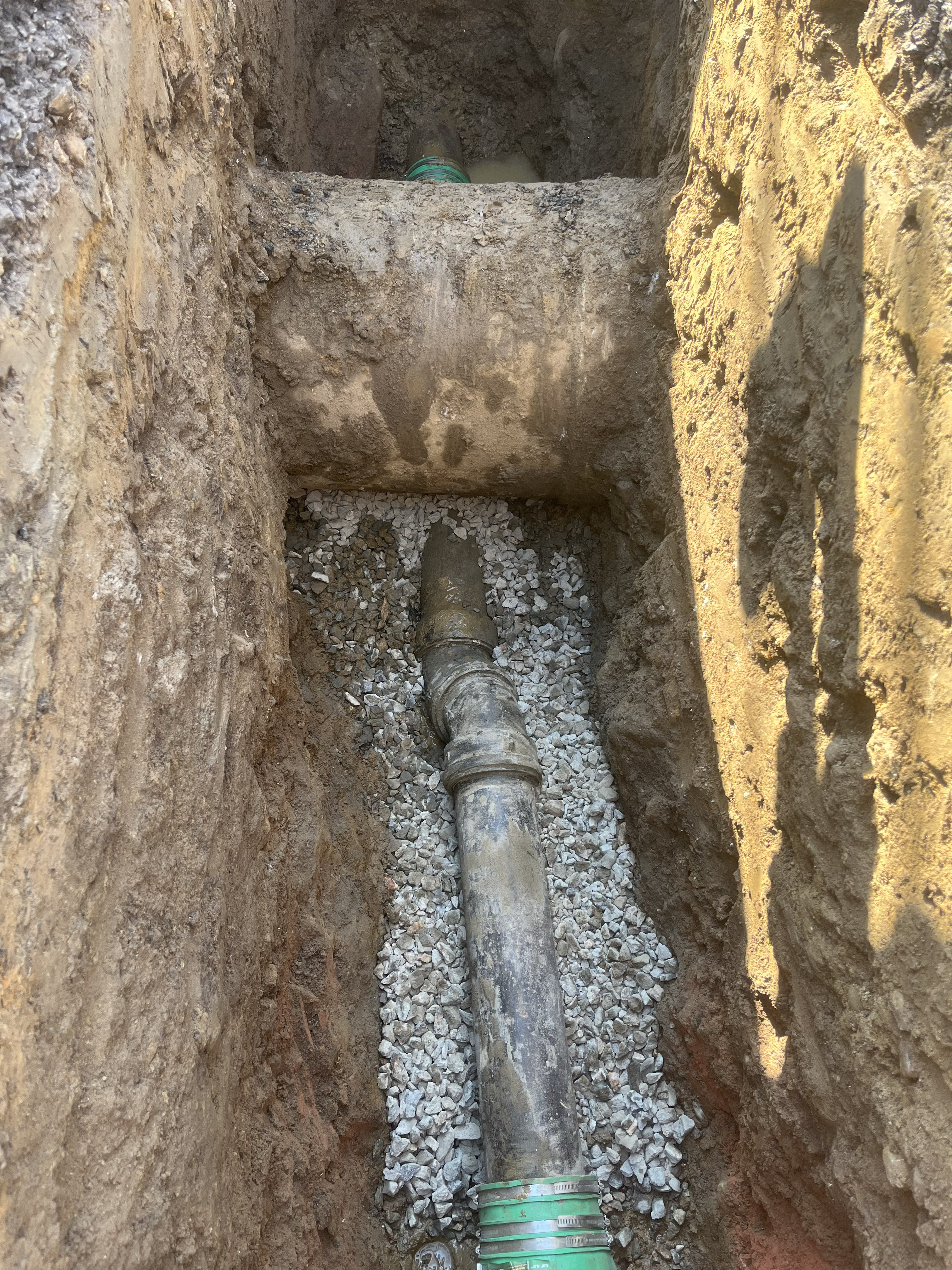
If damage is limited to one section, we can excavate that area only, remove the damaged portion, and install new pipe. This is more affordable than full replacement when the rest of the line is in good condition.
Trenchless Sewer Lining
For cracked pipes, root damage, or moderate deterioration, a sewer liner can restore your pipe without full excavation. We insert a resin-coated liner that cures into a new pipe inside your old one. Learn more about sewer liner installation →
Pipe Bursting
A trenchless method where we pull a new pipe through the old one, breaking the old pipe apart as the new one takes its place. Good for full replacements with minimal surface disruption.
Full Excavation & Replacement
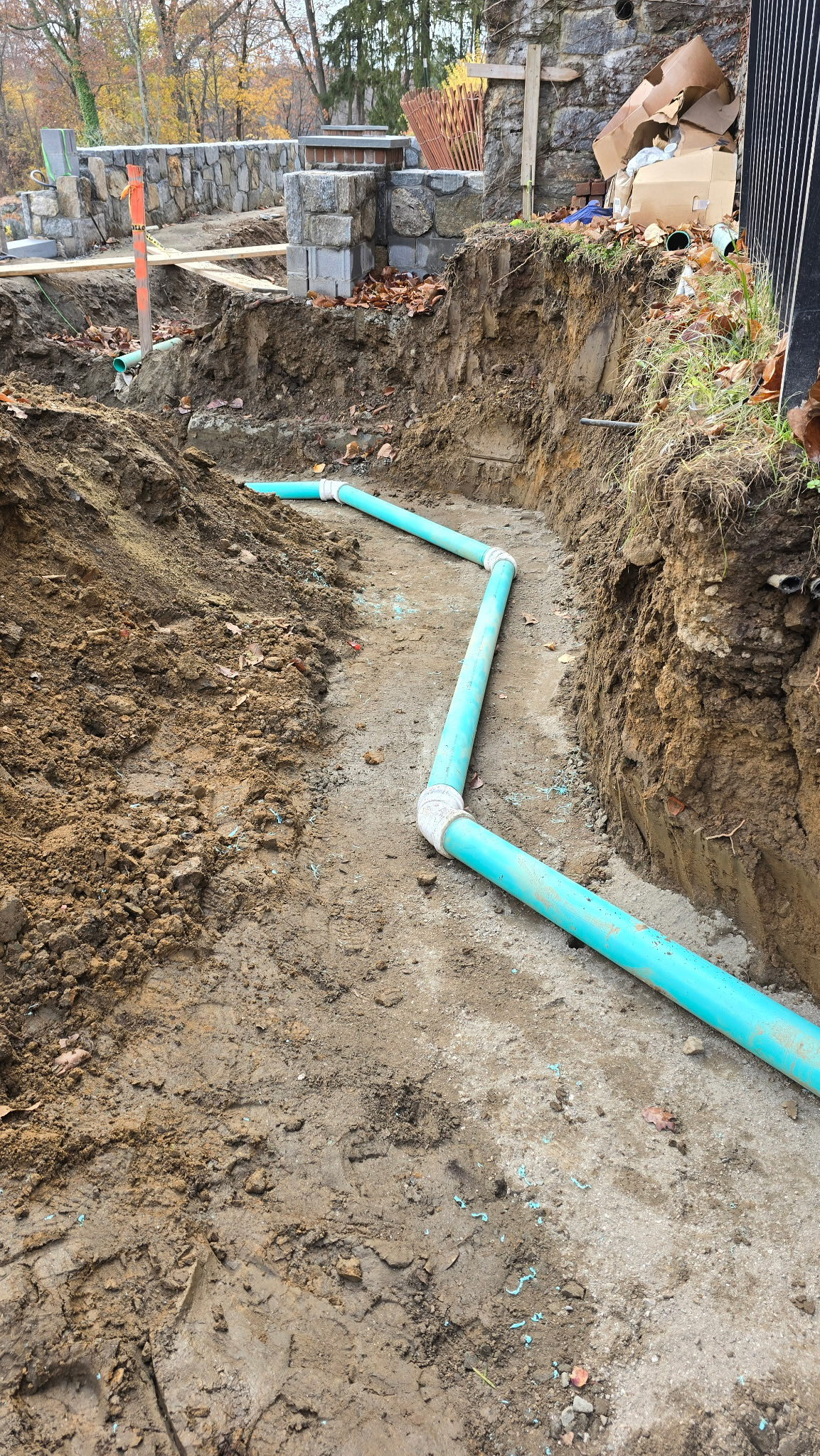
When the pipe is severely collapsed, back-pitched, or beyond trenchless repair, traditional excavation may be necessary. We dig a trench along the sewer line, remove the old pipe, and install new PVC or other durable material. We restore the work area when finished.
Our Repair Process
1. Diagnosis
Every repair starts with a camera inspection to see exactly what's wrong. We locate the damage, measure the depth and distance, and evaluate the pipe's overall condition.
2. Options & Pricing
We explain what we found and present your options—whether that's spot repair, lining, or replacement. You get honest recommendations and upfront pricing before any work begins.
3. Repair
Our experienced crew completes the work using quality materials and proper techniques. We handle permits if required and coordinate with utility locators as needed.
4. Testing & Verification
After repair, we test the line to ensure proper flow and may run a final camera inspection to verify the work. You'll know it's done right.
5. Restoration
If excavation was involved, we backfill properly and do our best to restore the surface—though landscaping may need time to recover or additional work depending on the scope.
Repair vs. Replace: How to Decide
We'll help you weigh the options honestly:
- Age of the pipe: If your line is 50+ years old and showing problems, replacement may be more cost-effective long-term.
- Extent of damage: One bad section? Spot repair. Multiple issues throughout? Consider full replacement or lining.
- Pipe material: Some older materials (like Orangeburg) are known to fail and are better replaced than repaired.
- Future plans: If you're staying in the home long-term, investing in a proper solution makes more sense.
We won't push you toward an expensive replacement if a simpler repair will solve the problem—and we won't patch something that really needs replacement.
Need Sewer Line Repair?
Let us diagnose the problem and give you honest options. Call today for an inspection.